Newly retired Coral Springs fire chief reflects on career, ‘doing the right thing’
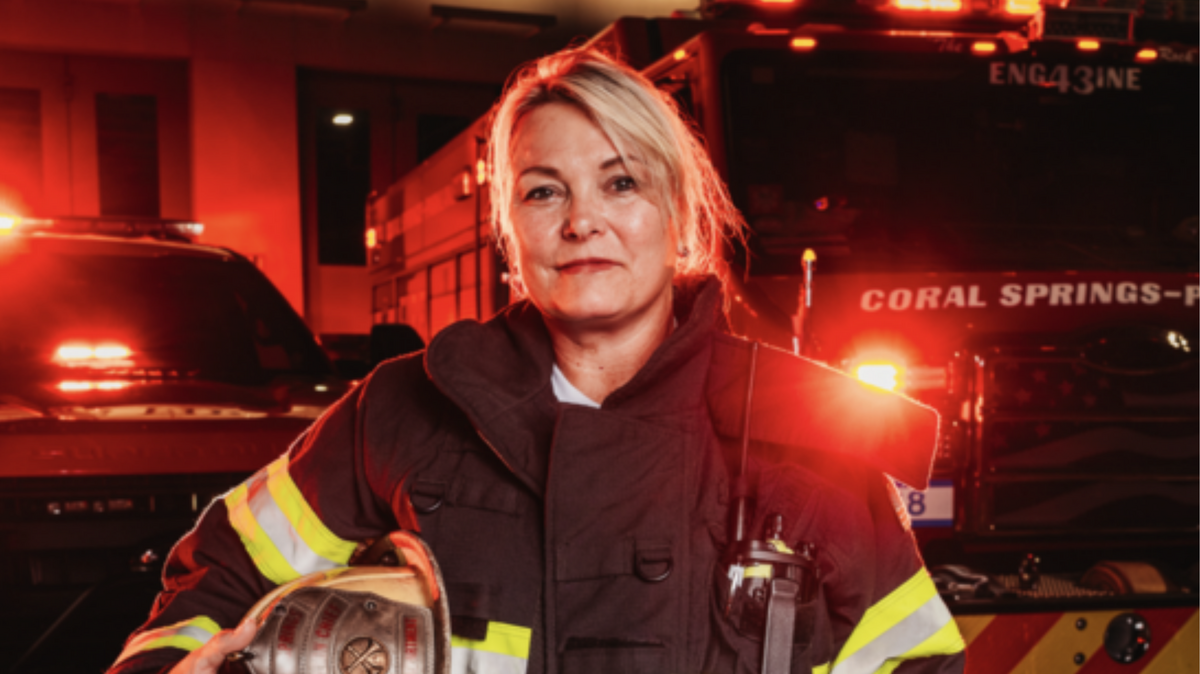
After serving in northwest Broward for over 25 years, District Chief Stephanie Palmer officially retired from the Coral Springs-Parkland Fire Department this November.
Decades ago, she moved to Florida and decided to leave her corporate job at the age of 30 to dedicate her life to something new after a ridealong with a firefighter friend.
Palmer graduated from the Miami-Dade fire academy as class leader in 2000, the only woman in her cohort. Coral Springs was one of the cities that invited her to interview for an open position on its squad.
“It was the best decision I ever made,” she told the Coral Springs News.
Palmer went on to serve in nearly every position in the Coral Springs-Parkland Fire Department.
She was the first woman to hold the position of district chief, but her proudest achievements include establishing a full-time dive commander position, implementing regular training from subject-matter experts for the department’s roughly 200 employees, and working on FEMA’s Urban Search and Rescue Team.
This conversation has been edited for length and clarity.
Q: How did you get into firefighting?
A: I worked for a Fortune 500 company in Indianapolis, Kraft Food Services, for almost 10 years, and I did a bunch of consulting work for trade shows. When my ex-husband and I moved to Florida, I decided that I wanted to do something else besides the corporate world.
I volunteered at a hospital to see if I liked it, and I liked it a lot better than the corporate life. And I met a girl that was a firefighter for Miami-Dade, and I had not met one firefighter in my life, and she told me I could go ride with her. So I went to her station.
I knew the second I ran a call with her, that was it. I was changing my mind, and I was changing my career.
Q: What was it that pulled you in?
A: You know, funny as it sounds. I think it had to do with the siren. Once they pushed that thing and we were going to a call, I just said, ‘This is exactly where I need to be.’
It was excitement. You were doing good for other people. It wasn’t about money anymore. It was just about the purpose of life and what your purpose is. And I really don’t think I picked it. I think it picked me.
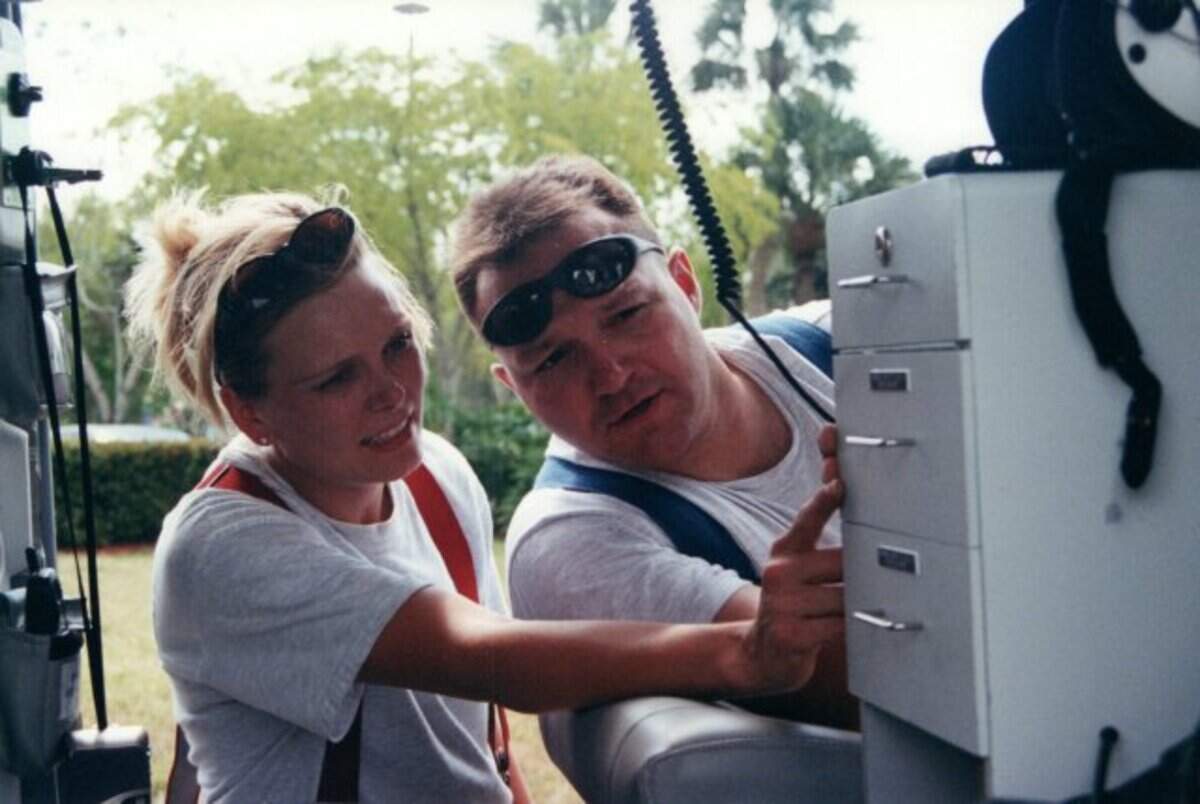
Q: What was it about Coral Springs that made you choose [to take a job here]?
A: There was just so many opportunities to start things from the very beginning there, and I think that’s one of the reasons why I stayed. I was fortunate enough to get into some things that I don’t think were going to be that available from other agencies that have been established for a long time.
Q: Are there any particular calls that stand out from that era?
A: The one that comes to mind was I was probably a month on the job, and there was a bank robbery.
The two bank tellers that were emptying out the ATM were ambushed, and both of them were shot, and we were first on [the scene]. So there was money lying everywhere, there was guns lying out everywhere. The police department was there, obviously to help us out, but it was just super chaotic.
We ended up saving both of those guys that day, because they were both, one was shot point blank his chest, and he ended up living.
I knew immediately I wasn’t afraid of anything, and I was super excited to just help these people, and that really was my turning point. I knew I always wanted to do the job, but that call in particular, I think, may have frightened a few people that were there, but the people I was with and myself who weren’t afraid of it — we just wanted to go in there and clean it up and help these people out.
About the 23 year mark, and that’s when my dad got sick, and my kids were almost off to college — it’s really the last two years, I’d be lying if I said anything other than that — I really just started doing less, and I was good with it. I was good leaving knowing I put in everything I had. You know, we established programs that will last longer than me. I created a division, the training division, that wasn’t there before, and those people are thriving today, and I’m proud of that.
It’s a double-edged sword. You want to be really good at your job, and then you have a hard time turning it off.
And I prioritized things wrong. I put my work first and my family second. I did 25 years, and probably the last two years of my career, I started really refocusing on what was going to be there when I left the department, and that was my family. And so I spent a lot of time the last couple years making amends with people and really giving my children and my husband my undivided attention.
Q: I didn’t even ask you about how you started with the dive team.
A: What’s funny when you called me the other day, I was thinking, ‘I really, really hate talking about myself,’ but then when I started thinking about my retirement ceremony — it was a hell of a send off. And I would listen to the stories people would tell, and I’m thinking, ‘Wow, you know, we really did some cool stuff, man.’ I had a great career, and I’m very happy I’m healthy to enjoy it.
But it’s the dive team and all the specialty stuff I did, especially USAR. USAR was my passion, I loved, absolutely loved being on that team.
Q: And what is USAR?
A: Urban Search and Rescue. We’re under FEMA’s umbrella and Homeland Security. We’re the people they call when things have gone terribly wrong. They’re not calling anybody else. We go in after every natural or even man-made disaster and search for people, look for victims and try to basically save everybody we can in a hurry.
So what happened with the dive team and the specialty team with FEMA is 9/11 came around, and I was a little over a year and a month on the job.
I called my boss, and I said, ‘When are we leaving?’ And he said, ‘Well, you can’t. If you leave, you’ll probably get fired.’ And I said, ‘I’m getting out the door somehow, some way.’
So I just started taking every technical rescue class I could take, and dive was one of them. I never dove before, because I was from Indiana originally, and then moving to Florida, I really didn’t know anybody that was a diver.
I never dove where it was pretty. It was dark and black water. And you weren’t looking for good stuff. You were looking for people that were underneath there. But it was one of those things where it was just another position in the department that I didn’t want to be the one standing on the side of the bank watching other people work. I just wanted to get in there to help.
It was not a very glamorous job, and it, in my opinion, was the most dangerous job in the department, because it’s the only time you ever work by yourself, and one breath will kill you.
It’s mostly canal diving here. And we’ve done some Everglades dives when planes have gone down or airboats have flipped over. That brings in a whole other level of fear, because there’s been several times that we’ve dove where there’s alligators sitting on the bank or underneath the water, and you pass them when you’re swimming.
Q: What kind of stories do you have from your time with USAR?
A: A couple of things were as close as you’re going to die without dying, a couple of deployments that I went on.
More recently, with the Surfside collapse, we spent a month there. It was just crazy, because there was a lot of personal connections to that.
We had a firefighter — his daughter was involved with the collapse, and we ended up finding her. And that was the game changer, that was the end of my career with USAR. That was the most work I was going to do to close that chapter out of my life.
We found her body with her mother. She was nine.
It was very personal to us. But the whole goal was to find every single person. And listen, there were a lot of teams working there. I’ll never take credit for it, just an ounce of that. But we were able to find all 98 victims of that collapse from a footprint that was the size of a football field, and the building was [12] stories high. The amount of work that was put into that was indescribable.
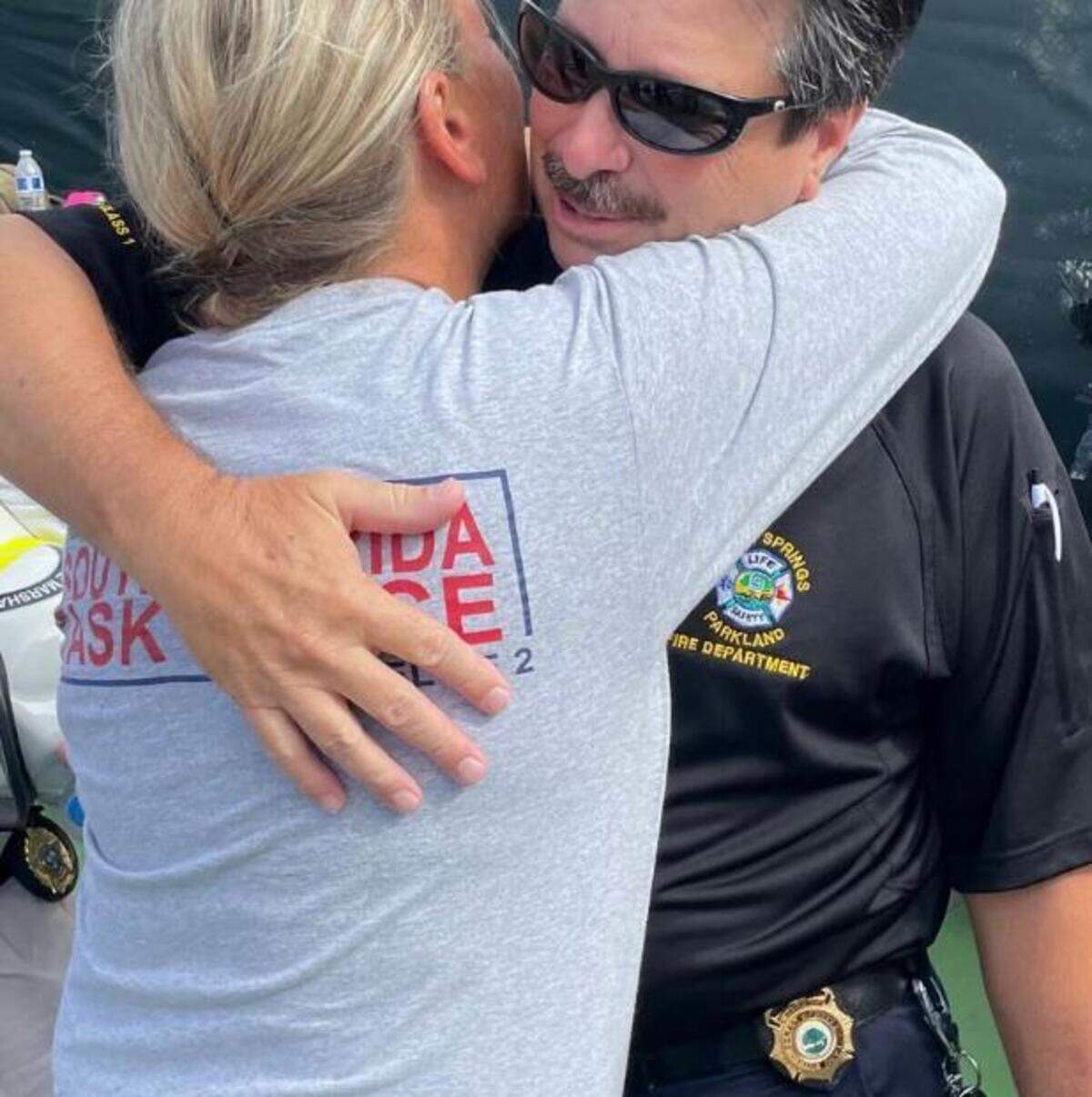
Q: How did you juggle all of that?
A: It was crazy. My husband and I — to spin off from the professional world — in our personal lives, in the first seven years of our marriage, we had five different families live with us, and we fostered two kids.
One lady was dying of cancer. My husband actually met her on a call at work, and she didn’t have any family, and so we moved her in until she passed away. She became a part of our family.
So on top of all that, and getting promoted and going through the ranks and being deployed, that’s why we never could turn it off. Now that we’re retired, both of us, we, actually really like each other and spend more time with each other. We’re getting to know each other again. Because I didn’t have a balance, it was just 110 miles an hour all day, every day.
The hardest part for me now is just realizing I don’t have to have everything done right now. Like, that’s super hard for me, and I still wake up 100 miles an hour, but I’m like, I can actually relax.
Q: If you were looking at somebody who is in the same position as you were 25 years ago, what would you want them to know?
A: I tell people all the time about the fire service, especially new people. I ask them, ‘Have you ever been in love? And I mean like, real love, like your heart aches when they leave?’
The fire service is going to break your heart. It will break your heart when nobody’s looking, but it’s like anything else. If you do it for the right reasons and you love it, you’re going to get up the next morning and you’re going to work harder to make it right, you’re going to make.
It’s not about money, it’s not about the accomplishments or rank or whatever. It’s about doing the right thing and being good with your heart and your soul.