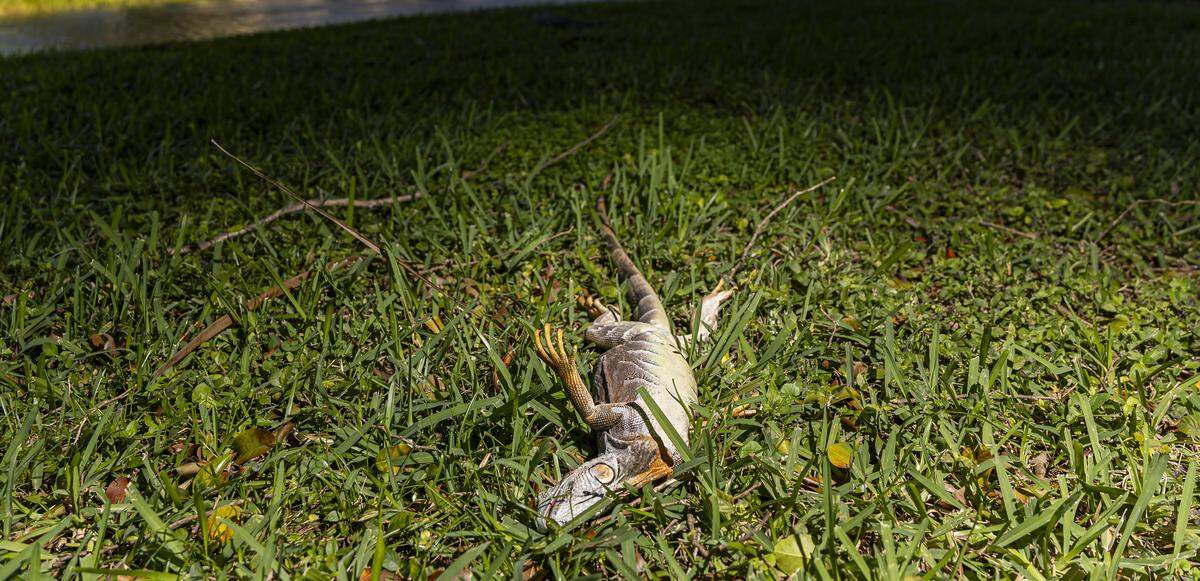
Cold weather leaves iguanas in Coral Springs stunned, easy to catch. Have a look
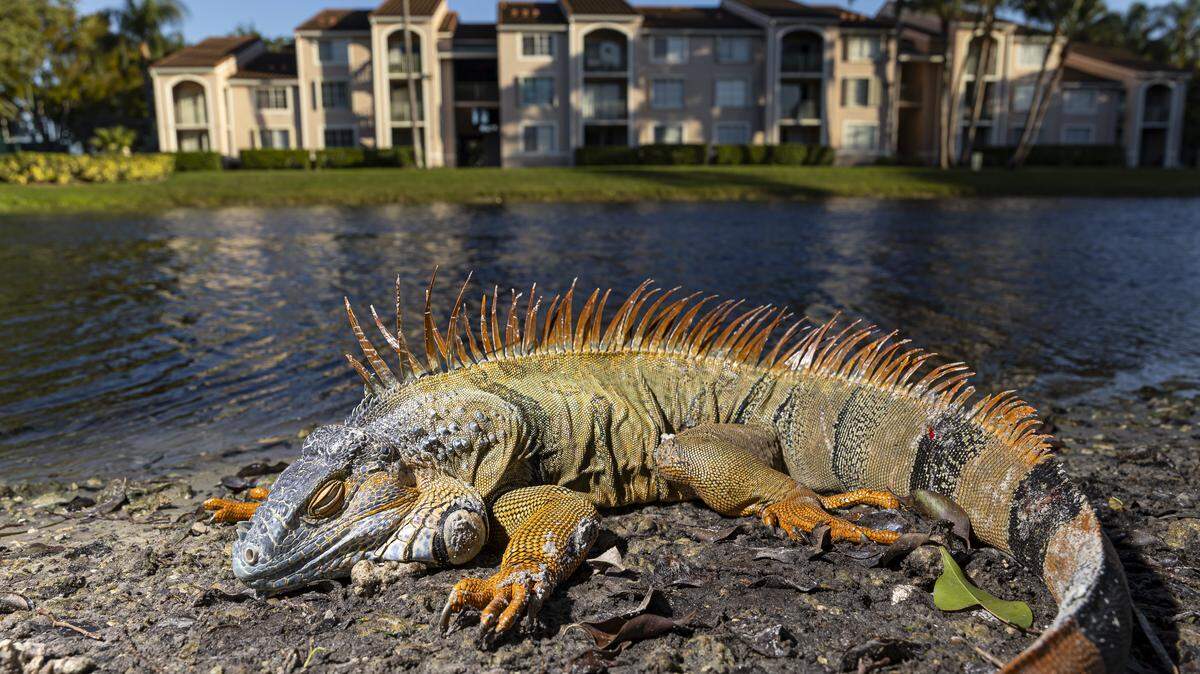
West Broward turned into one of the chilliest spots in South Florida over the weekend as a rare cold snap sent temperatures plunging toward freezing — and spelled bad news for iguanas in Coral Springs.
The invasive reptiles’ battle against the cold — and capture — continued on Monday, Feb. 2.
It all began Sunday, as temperatures dipped into the low 30s in West Broward and iguana removal companies took advantage of their incapacitated prey.
They reported an unusually high volume of calls from from western cities such as Coral Springs, where residents woke up to green iguanas lying motionless.
Photos taken by Miami Herald photographers in Pembroke Pines showed moribund iguanas on the ground. The reptiles are disliked for the damage they do to plant life and waste.
Across South Florida, trappers with Redline Iguana Removal said they were scooping up iguanas “by the dozens” as the cold weather overwhelmed the cold-blooded reptiles, they told the Miami Herald.
“I would say we found the most iguansa in West Broward, cities like Davie, Pembroke Pines, Coral Springs and Cooper City,” Blake Wilkins, owner of Redline Iguana Removal, told the Coral Springs News on Feb. 2.
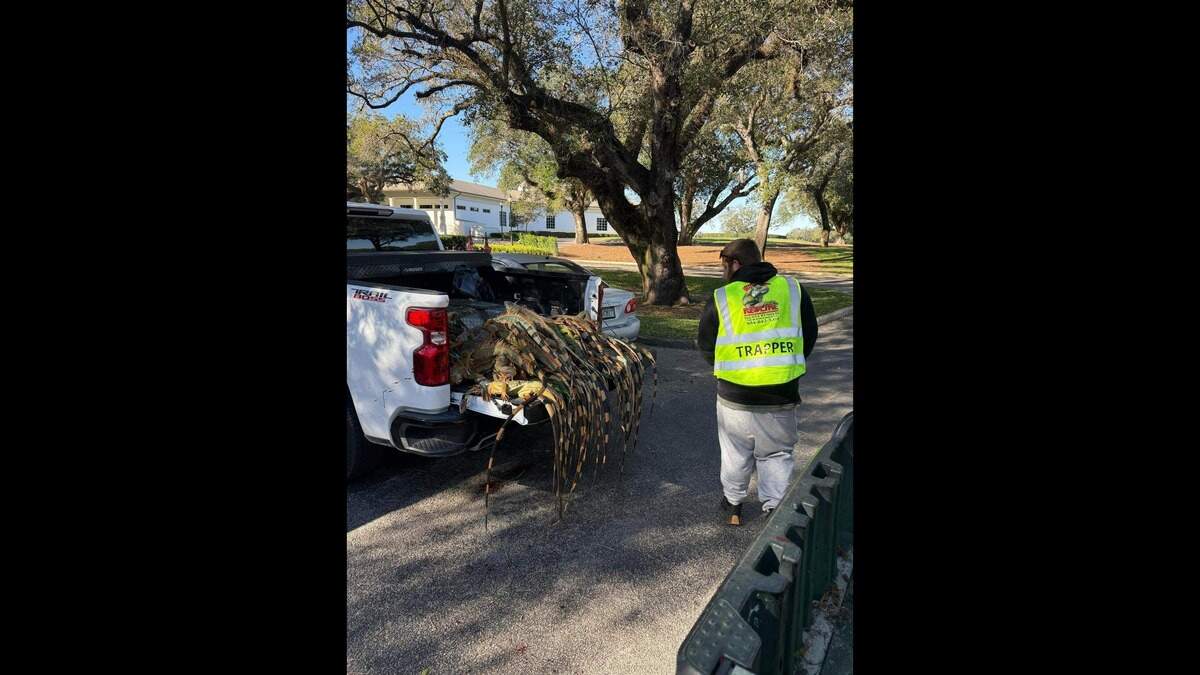
Wilkins said his crews began working before sunrise to take advantage of the cold conditions. By Sunday afternoon, his trappers had already visited roughly 100 locations across the region, he told the Herald.
“We’ll know better what the final count is at the end of the day Monday, but a ballpark figure is about 2,000 iguanas caught,” Wilkins said.
Indeed, it was a rough weekend for the reptiles as the temperature at the National Weather Service station near Fort Lauderdale-Hollywood International Airport at 6:53 a.m. on Sunday hit 35 degrees, just slightly above the daily record low of 33 recorded in 1966.
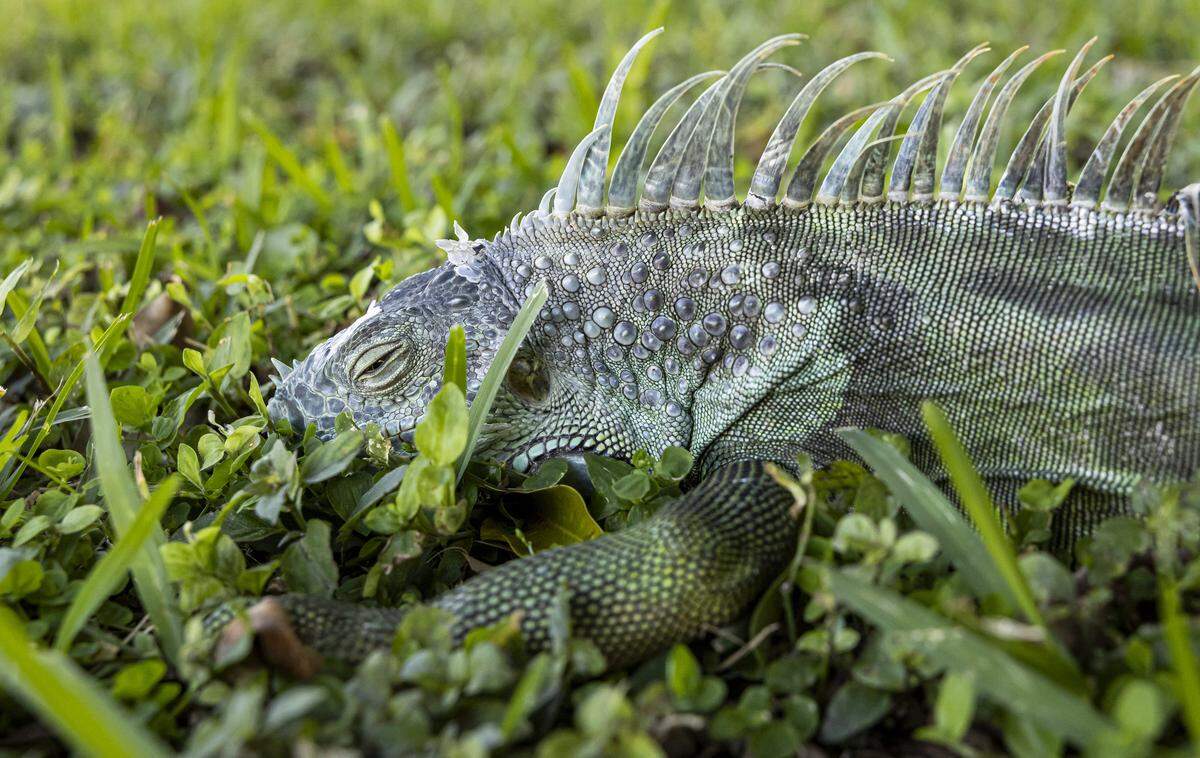
Wilkins, who has been removing iguanas for about a decade, said this cold front produced more frozen iguanas than he has ever seen. About half of the iguanas his crews collected were already dead.
For those iguanas that survived, the Florida Fish and Wildlife Conservation Commission has temporarily lifted its usual restrictions over the weekend, allowing people on Sunday and Monday to trap the non-native invasive species and bring them to designated FWC offices for humane killing or transfer to permitted pet operators.
Still, professionals warned Coral Springs residents not to handle the animals themselves. Iguanas that appear frozen can revive quickly once temperatures rise, becoming aggressive.
As temperatures warm, removal companies expect calls to continue, especially from residents concerned about iguanas reviving and fleeing into trees and canals.