Mullins Park soccer field to get $1.3 million upgrade after commission approval
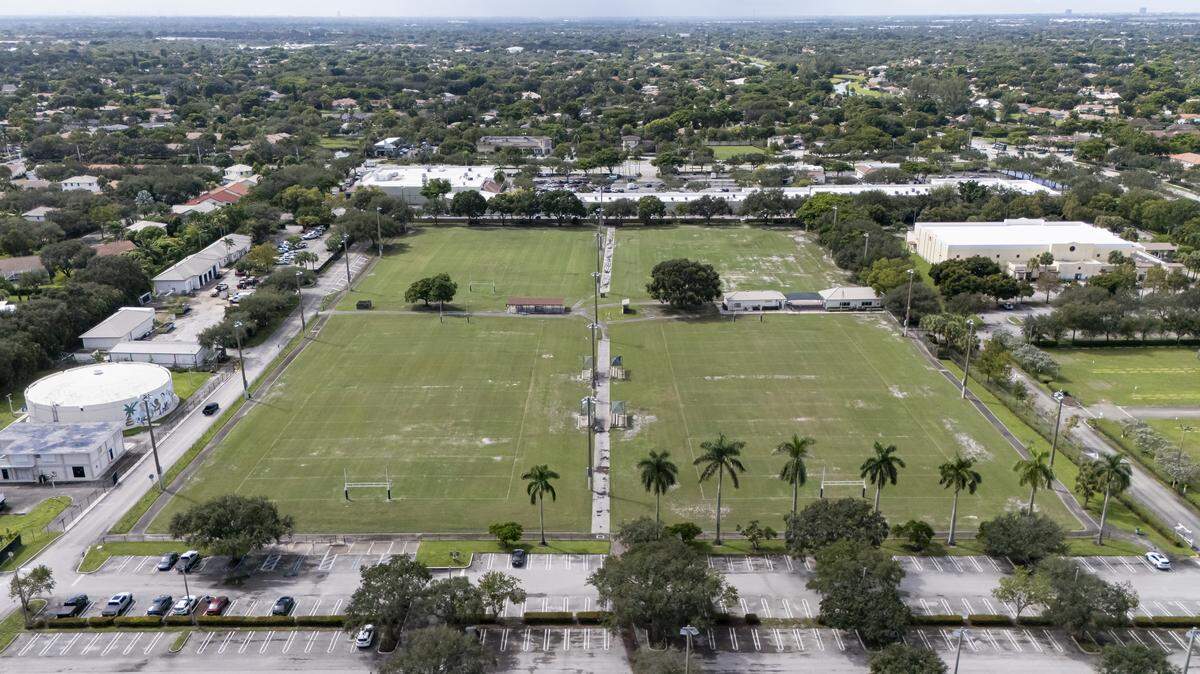
Soccer Field #3 at Coral Springs’ Mullins Park will have a new playing surface following a unanimous vote by city commissioners to nearly double the size of a contract with Astroturf Corporation.
The move adds $1.3 million to the deal, bringing it to a total of $2.7 million paid to the Georgia-based company, which will replace natural grass fields with synthetic materials. Construction is scheduled to be completed by the Fourth of July, according to city officials.
Parks and Recreation Director Rob Hunter said during the Feb. 18 meeting that while Field #3 has been cleared as safe for play, it is in “rough, rough shape.”
City commissioners noted that they had received complaints about conditions from parents and coaches who regularly use the fields for soccer games.
Turf’s other selling point, according to city documents, is its reduced maintenance requirements. While natural grass fields require downtime to replace old sod, grass and field lines, turf is hardier and drains faster after rainstorms.
Hunter also mentioned that, if history is an indicator, the fields will likely last into the 2030s, up to a decade past their warranty.
When it came to commission questions ahead of the vote, the other end of Florida’s weather patterns was top of mind.
“I know I’ve got in a lot of emails regarding that when it gets extremely hot, folks can feel that heat coming from the rubber,” said Vice Mayor Nancy Metayer Bowen, who then asked Hunter to explain how the new turf will manage cooling needs.
Depending on the material used, research shows that some types of turf can reach up to 200 degrees — enough to cause second-degree burns. Researchers at Mount Sinai’s Icahn School of Medicine and elsewhere have done extensive research on turf’s other health risks for children, which include chemical exposure, illness and increased injury risks.
Hunter said that Astroturf’s new models use longer faux-grass blades and a base layer of lava rock to increase airflow and pull heat into the ground.
“It should be anywhere from 8 to 10% cooler than most Astroturf fields due to that crushed lava rock being mixed in with the base,” Hunter said.
Astroturf maintains that its surfaces are safe for play.